

Cabin comparison guide
Regional vs Long-Haul Cabins on a USA to Asia Business Class Trip
Business class is a cabin category, not a universal seat specification. A journey from the United States to Asia may combine a long-haul cabin with a different product on the onward flight. Understanding that difference helps you spend on the comfort features that matter most for your particular trip.
Key points
Compare transpacific and regional cabins on a business class trip from the USA to Asia. Check seat type, aisle access, cabin mix and operating airlines.
Separate the cabin label from the seat product
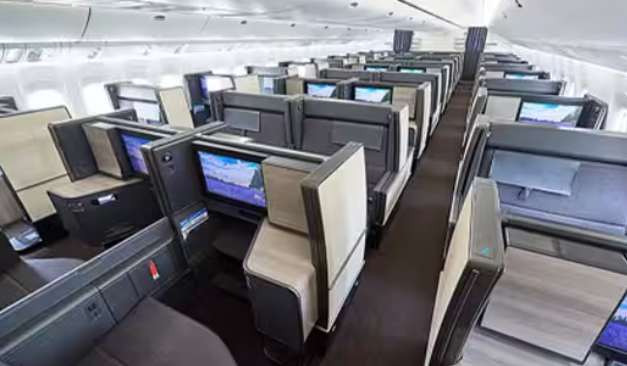
An airline can use several business class products across its fleet. Singapore Airlines’ official cabin overview, for example, lists long-haul and regional products separately. A photograph of one product does not establish what will operate on every flight under that airline’s name.
Ask for the expected aircraft and cabin configuration on each sector of the proposed itinerary. Treat the answer as the planned product rather than an unconditional promise: airlines can change equipment. If a particular seat feature is essential, discuss how an aircraft change would affect your plans and what the fare conditions allow.
Describe the comfort feature you need
Use specific terms instead of asking only for a good business class seat. A fully flat sleeping surface, easy aisle access, space for your feet and a convenient pair of seats answer different needs. A solo traveler seeking privacy may rank them differently from two people who want to sit together.
EVA Air’s product pages illustrate the distinction: its Premium Laurel description refers to almost-flat seating, while its 787-9 Royal Laurel introduction describes fully lie-flat seats. These descriptions should not be treated as interchangeable. Verify the product assigned to your proposed flight and prioritize the feature you actually need.
Match the seat to the time available to use it
Consider when the flight operates and what you plan to do after landing. On an overnight ocean crossing, the ability to settle into a sleeping position may be central to the decision. On a shorter daytime flight, your priorities may shift toward the departure time, the connection or traveling with a companion.
Also account for boarding, meal service and descent when thinking about usable rest time. A flight’s scheduled duration is not the same as uninterrupted time in bed. The most attractive seat on paper may be less useful if the overall itinerary leaves you tired or creates an awkward arrival.
Read mixed-cabin proposals one segment at a time
Ask the agent to show the origin, destination, operating carrier and cabin for each flight. Identify any economy or premium economy sector before comparing the total with another quotation. Decide whether a different cabin on a short connection is acceptable rather than discovering it later in the itinerary.
Check the return independently. It may use a different route, aircraft or operator. A matching airline logo and cabin label do not guarantee an identical experience in both directions. Keep your must-have requirements visible when alternatives are presented, especially if the quotation changes during an availability check.
Keep airport benefits separate from seat expectations
Lounge access, baggage and seating requests should be confirmed for the actual ticket and operating itinerary. Do not infer every benefit from a seat photo or the price alone. Ask where any eligible lounge is located, whether it fits the transfer route and what baggage allowance is being quoted.
For a Business Flight JP enquiry, send the route, dates, traveler count and your three most important comfort requirements. That gives an agent a practical basis for comparing Japan and Asia business class options. The goal is an itinerary that suits your needs, with its cabin differences clearly explained.
Want flight and fare options for your dates?
Send your U.S. departure city, destination in Japan or Asia, dates and traveler count. We will review business class options and fare conditions for your itinerary.
Frequently asked questions
Does regional business class always mean a reclining seat?
No. Regional products vary. Check the specific aircraft and cabin rather than using route length as a substitute for seat information.
Can a flight’s aircraft change after the itinerary is arranged?
Yes. Treat the listed product as the expected operation and review any later schedule or equipment notifications relevant to your booking.
Sources & booking note
Airline schedules, aircraft, seat products, availability and fare rules are date-specific and can change. Verify the final itinerary before payment.